The Cyberpunk Aesthetic of 'Never Stop on the Side of the Road'
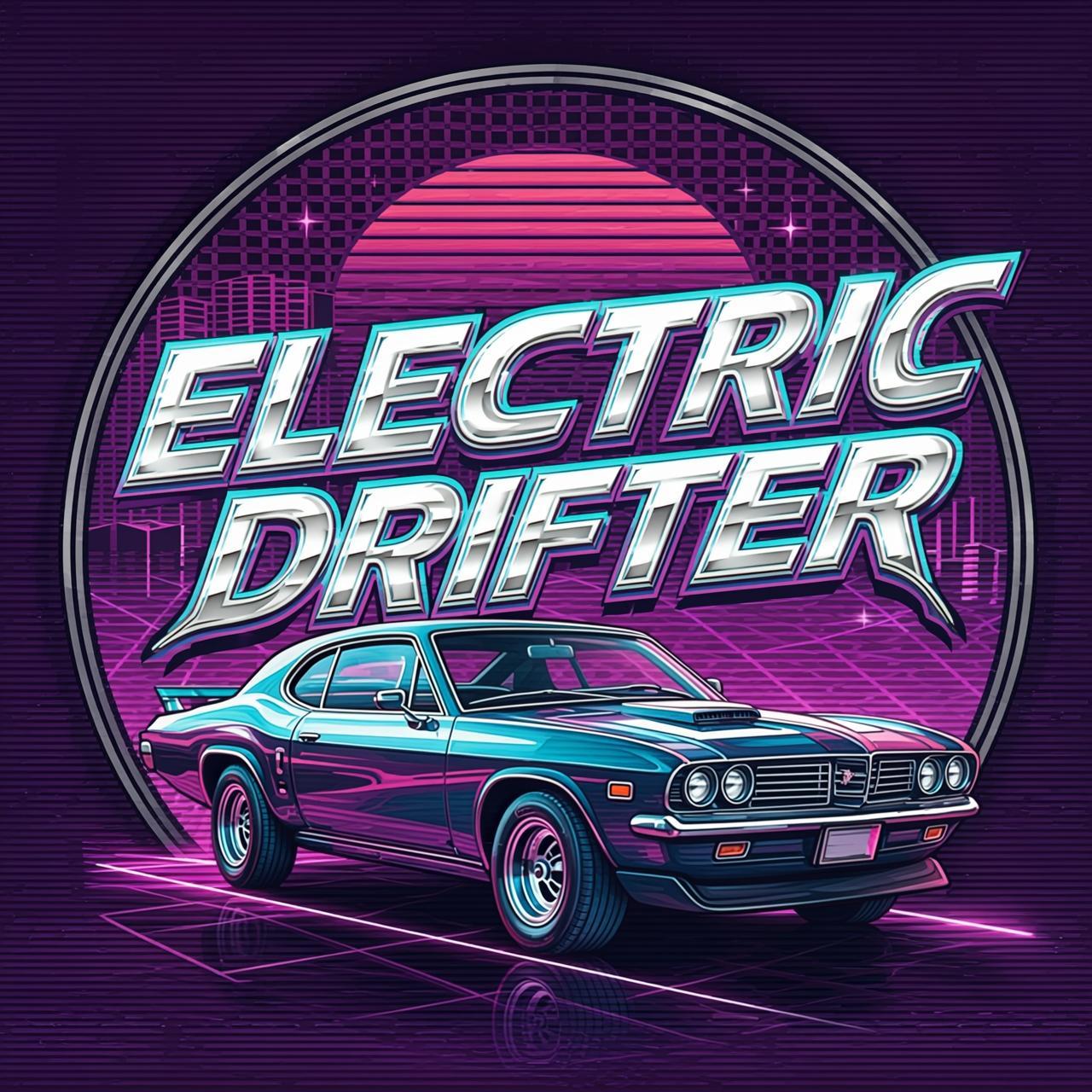
The look for 'Never Stop on the Side of the Road' isn't just a cover — it's a statement. The deserted road that disappears into the horizon, the sky between purple and orange, the red neon text: everything refers to cyberpunk and retrowave aesthetics, but with a personal and melancholic touch. Inspired by Blade Runner, 80s design and the night highways of independent cinema, the album proposes a future that is not dystopian by chance — it is palpable. The colors cyan, magenta, deep purple and smoke black dominate the visual imagery. The vintage car parked on the road, the cacti that pass by, the neon that pulses like a heart. All of this tells the same story: the road continues, and the Electric Drifter continues, alone, but never disappointed.

What is Cyberpunk?
Cyberpunk is a subgenre of science fiction that focuses on futuristic societies where technology is ubiquitous but often associated with social degradation. The stories are often set in dense, neon-filled urban environments and explore themes such as:
Social inequality: The divide between rich and poor is stark, with the powerful controlling technology and resources.
Invasive technology: The presence of cybernetic implants and artificial intelligence that challenge human nature.
Urban culture: The visual aesthetic is marked by elements such as graffiti, alternative fashion and a vibrant color palette.
These elements are fundamental to understanding the aesthetics of 'Never Stop on the Side of the Road'.
Visual Aesthetic
Colors and Lighting
One of the most striking aspects of the cyberpunk aesthetic is the use of vibrant colors and dramatic lighting, using a neon palette, with shades of blue, pink and green, which not only creates an immersive atmosphere, but also symbolizes the duality between beauty and decay.
Neon: Neon lights are a classic symbol of the genre, representing both modernity and alienation.
Shadows: The contrast between light and shadow is used to emphasize the tension between the characters and the environment.
Urban Scenarios
Urban settings are crucial to the narrative. The film presents a futuristic city that is both fascinating and oppressive. The streets are full of skyscrapers, LED panels and crowds of people, reflecting the chaotic life and struggle for survival.
Architecture: Tall, angular buildings with futuristic designs create an environment that feels alive and pulsating.
Public spaces: The scenes in squares and markets show the interaction between the characters and the environment, highlighting urban culture.
Main Themes
The Struggle for Identity
One of the central themes of cyberpunk culture is the search for identity in a world dominated by technology.
Social Criticism
The cyberpunk theme also serves as a critique of contemporary society, addressing issues such as inequality, surveillance and the dehumanization caused by technology.
The Soundtrack
The soundtrack for 'Never Stop on the Side of the Road' is heavily based on the cyberpunk theme of the experience. The choice of electronic tracks heightens the emotions and tension in key scenes.
Conclusion
The cyberpunk aesthetic of 'Never Stop on the Side of the Road' is a rich tapestry of visual, narrative and sonic elements that intertwine to create a unique experience. The album not only entertains, but also provokes reflections on the human condition in an increasingly technological world. By exploring themes of identity, inequality and the fight for freedom, it becomes a relevant and impactful work.
If you haven't heard it yet, don't miss the opportunity to dive into this fascinating universe. The cyberpunk aesthetic is not just an art form, but a window into the issues we face today.


Comments